Farmers hoping to produce Mbeya fertiliser are keeping their fingers crossed as the timeframe between now and the planting rains may not enable them produce the alternative soil enriching product.
Why? Inorganic fertiliser, a key ingredient in the production of Mbeya is not available for the vulnerable smallholder farmers most of whom depend on subsidies under the Farm Inputs Subsidy Programme (Fisp).
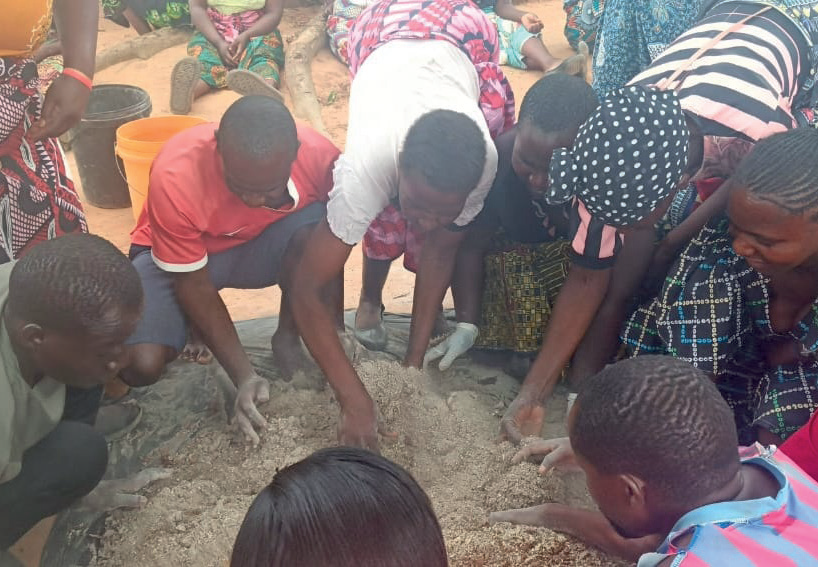
In an interview yesterday, Nzeru N’chuma Farmers Club chairperson Joseph Mwasiya from Traditional Authority Chigaru in Blantyre said farmers in his area were desperate because they do not know how to cope with the fertiliser shortage.
He said most farmers are yet to redeem their fertiliser under Fisp, raising fears that further delays would result in poor harvests in the 2026/27 growing season.
“To make matters worse, we also don’t know how to produce Mbeya fertiliser because no one from government came to teach us. So, with the El Niño forecast, farmers don’t have any hope in farming,” said Mwasiya.
Another farmer, Gift Sauzane, from Madisi in Dowa, shared the concern, saying fertiliser shortages would undermine crop production in the coming season.
“The problem is that the Mbeya fertiliser which government is promoting needs time, at least 21 days. So, the fear is most of the farmers here are yet to start redeeming fertiliser and government is not clear on this Mbeya fertiliser. This will affect crop production next year,” he said.
The concerns come amid data from Fertiliser Association of Malawi (FAM) showing that the country has approximately 148 000 metric tonnes (MT) of fertiliser in stock, against an estimated annual requirement of between 450 000 and 475 000MT.
This leaves a potential shortfall of more than 300 000MT, raising concerns about fertiliser availability and affordability as farmers prepare for the growing season.
The Nation spot-checks in Blantyre, Phalombe and Zomba in the Southern Region as well as Lilongwe, Kasungu and Dowa in the Central Region and Mzimba and Rumphi in the Northern Region showed that some farmers are yet to start producing Mbeya fertiliser because they lack inorganic fertiliser.
The farmers interviewed said they are waiting to redeem farm inputs under Fisp as they cannot afford chemical fertiliser, currently selling at K205 000 a 50-kilogramme bag.
Ironically, Minister of Agriculture, Irrigation and Water Development Roza Mbilizi told the media in Lilongwe on Friday that this year’s Fisp has prioritised hard-to-reach areas that receive early rains to ensure preparedness at the onset of rains.
She said the exercise has started in districts such as Chitipa, Mwanza, Neno, Chikwawa, Nsanje and areas such as Makanjira in Mangochi.
Commenting on the delay, Mwapata Institute executive director William Chadza expressed concern over farmers’ inability to access fertiliser on time, saying this could affect both planting schedules and preparations for Mbeya fertiliser.
He said the mixture takes about 21 days to prepare, meaning delays in accessing inorganic fertiliser would disrupt farmers’ preparations for the growing season.
Chadza further warned that late access to farm inputs could lead to lower crop yields and leave farmers more vulnerable to anticipated El Niño-related climate shocks.
However, Ministry of Agriculture, Irrigation and Water Development spokesperson Salome Gangire expressed optimism that farmers would access fertiliser before the onset of the rainy season.
She said the ministry has prioritised districts where rains were expected to start earlier, as well as areas that are difficult to reach.
The districts include Chikwawa, Nsanje, Neno, Mulanje, Thyolo, Mangochi, Dedza, Mchinji, Ntchisi, Nkhotakota, Nkhata Bay, Likoma, Mzimba South and Chitipa.
Fisp, launched in Ntchisi on September 24, requires each beneficiary to contribute K50 000 towards a package comprising two 50kg bags of fertiliser, subsidised at K20 000 each, and a five kg packet of certified maize seed costing K10 000.